I think any writer who chooses to incorporate horror into their writing will eventually receive some kind of flak for it. It can be the inclusion of gore and violence, monsters or the supernatural, intense and dark subject matter, a nail-biting amount of suspense. Whatever it is, you’ll probably get at least one reader throwing a hissy fit about how it’s just not right to be thinking about stuff like this because only messed up, crazy people let their minds go down these kinds of rabbit holes. There’s no need to think about such things, never mind go a step further and write about such things, and worst of all, share such things with other people, planting all these horrible visions in the heads of innocent consumers. What is the world coming to?
As annoyed as I feel when I get this type of criticism about my own books, I can’t entirely blame these types of readers.
Because I was once like them too.
I’m sure many people assume that I’ve always loved horror and that it’s one of my favorite genres. If you meet me through my writing, I probably look like a dark and possibly homicidal figure standing in the shadows, and if you meet me in real life, I probably don’t look significantly better, what with my RBF and habit of diving into deep and dark conversations head-first, even with people who only wanted to say a flippant “hello.” As one of my friends once told me, “You have very dark purple kind of aura, Ann.”
But actually, I’ve only very recently come to accept horror as a worthy genre and even to admit that I like horror. For the longest time, I thought it was too intense of a genre at best and a negative influence on society at worst. It was hypocritical of me to think this way, though, because when I take a closer look at the types of stories I’ve long liked, works of horror, both those that are considered primary representatives of the genre as well as those that incorporated horror elements through more peripheral manners, have always been in my mix of favorites.
A big reason I’d been in denial about my penchant for this genre is because I held a very narrow definition of it. For some reason, I’d always thought that only works like Chucky, Saw, Scream, The Ring, or Poltergeist defined horror, and I hated these types of works because they always seemed like the result of very twisted people taking real-life tragedies, such as torture, rape, abuse, murder, and mental illness, and sensationalizing them for the profit and entertainment of other equally twisted people.
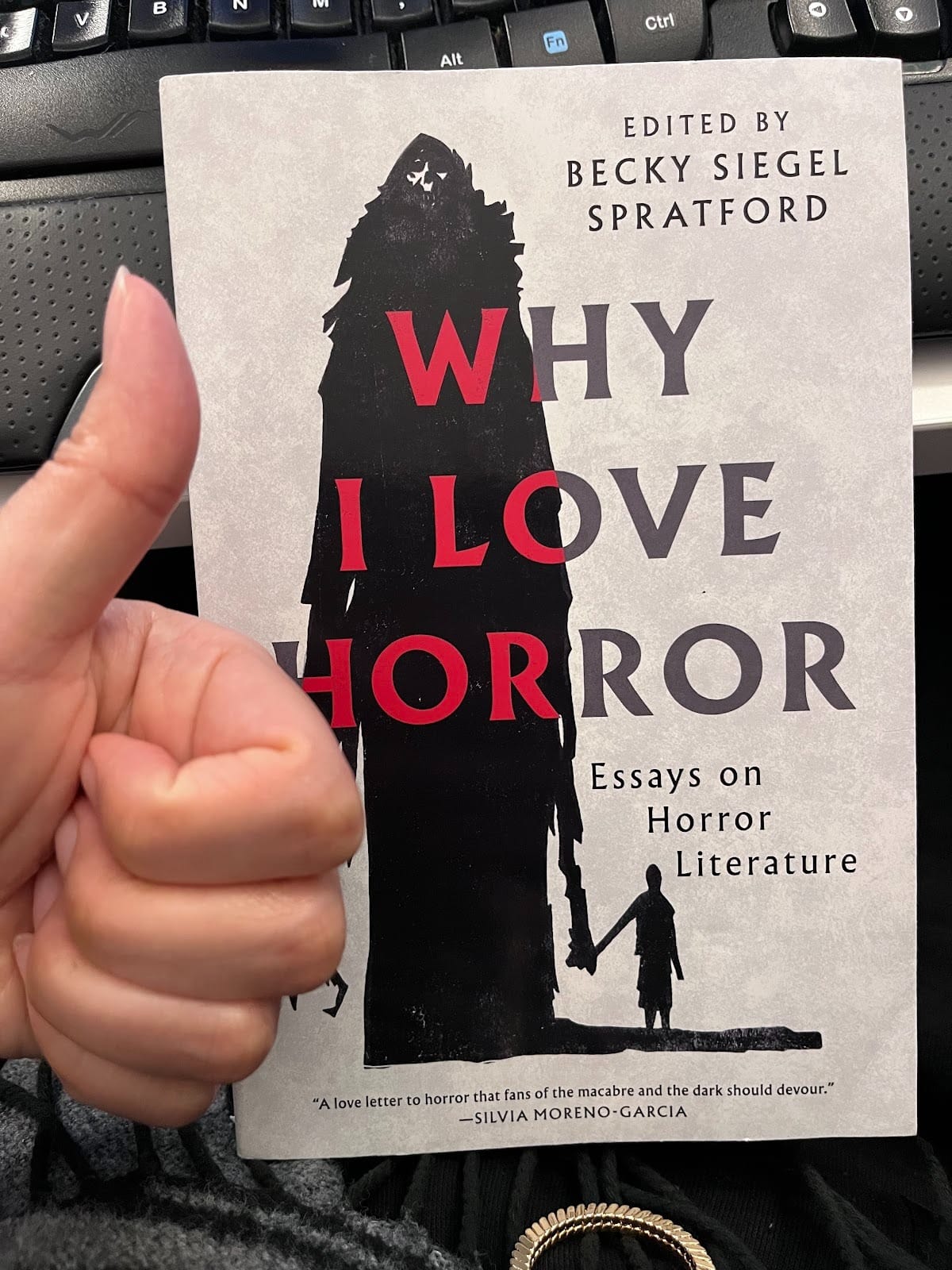
But growing as a writer and even reading books like Why I Love Horror, which is today’s featured image, made me confront my definition. I realized that there’s so much more to horror than just these slasher and supernatural blockbusters that had dominated box offices in the past.
Horror is the Korean folktales I grew up listening to and loving. There were ghost stories like that of two young sisters, who were murdered by their evil stepmother and would not rest until the local judge brought their stepmother to justice. There were also stories like that of a tiger, who followed a woman traveling through the mountains, ambushing her at random moments and repeating the haunting refrain of “If you give me a piece of dduk, I won’t eat you!” And the woman continued feeding the tiger the delicious manna she was carrying until she ran out, and when she did, the tiger began to demand one body part after another, an arm here, a leg there, until there was nothing left of the woman. I loved it every time my mom would tell me this story. She’d lift her hands as if they were tiger paws or lean forward slowly then suddenly as she rumbled then shouted, “If you give me a piece of dduk, I won’t eat you!” (It also helped that I’ve always loved Korean manna and could totally understand why a tiger would hunt down an innocent lady for just one more bite. I’d do the same if I were him!)
But I refused to acknowledge that my beloved Korean bedtime stories belonged to horror. I’d tell myself that they were “folklore,” not “horror.” True horror was only the trashy, modern stuff. Sure, these precious folktales kind of, sort of had scary elements that definitely belonged to horror. But that didn’t mean that they, the whole stories themselves, were actually horror. They just had horror parts!
Likewise, I loved The Sixth Sense and was utterly in awe of its genius the first time I watched it. I decided to categorize it as an “exception” or an anomaly to the genre of horror, though, precisely because it was an obvious work of genius. Such excellent choice of metaphors and skill in cinematography couldn’t possibly fall within the same genre as mindless slasher movies like Scream, which held little to no metaphorical merit or refined artistic finesse. Plus, wasn’t horror supposed to be all about glamorizing hopelessness and evil? Well, then The Sixth Sense, even if its entire premise revolved around ghosts, couldn’t possibly be representative of what horror really was because The Sixth Sense’s whole point was that the horrors of our world can only be healed when we try to listen to one another and talk about what’s haunting us. The movie was, at it’s core, an artsy-fartsy attempt to tell people that they should have hope, show compassion, and help each other out a little. So, it couldn’t possibly be a “real” horror movie. It was an exception, and if I liked an exception within horror, then I couldn’t possibly say that I liked horror as a whole.
I made up similar excuses when I read classics like Frankenstein, Dracula, The Turn of the Screw, even though I loved these works, studied them at length, and recognized that their creators were geniuses of their time. Even when I committed parts of Edgar Allan Poe poems to memory, I never considered myself to be someone who liked or even approved of horror.
Well, I’m sure you’ve already guessed how this story ends. In the end, I had to get over myself and accept that all of these works (and many more) did, indeed, belong to horror because … well … it was the truth! Horror is a many-faced thing, and it most definitely is not constricted to the blockbuster mega hits that had their heydays while I was growing up. Horror is whatever inspires horror, and the spectrum of stories that can inspire horror is very broad indeed.
Of course, many works of horror don’t always fall neatly into that genre. For example, I still think the Korean folktales I grew up with are most accurately described first and foremost as “folktales” rather than “horror stories.” Using the word “folktales” is the most efficient manner through which to convey the kinds of structure, characters, purpose, and time period that a potential audience should expect of these stories. But at the same time, these folktales can also be called “ghost stories” or “scary stories from ancient Korea” in addition to being called “folktales,” and last time I checked, ghost stories and scary stories were both different ways of saying “horror.” In other words, if a story has definite horror elements, even in smaller quantities than one might initially anticipate from a work of horror, that story still does ultimately belong to horror in some way, shape, or form.
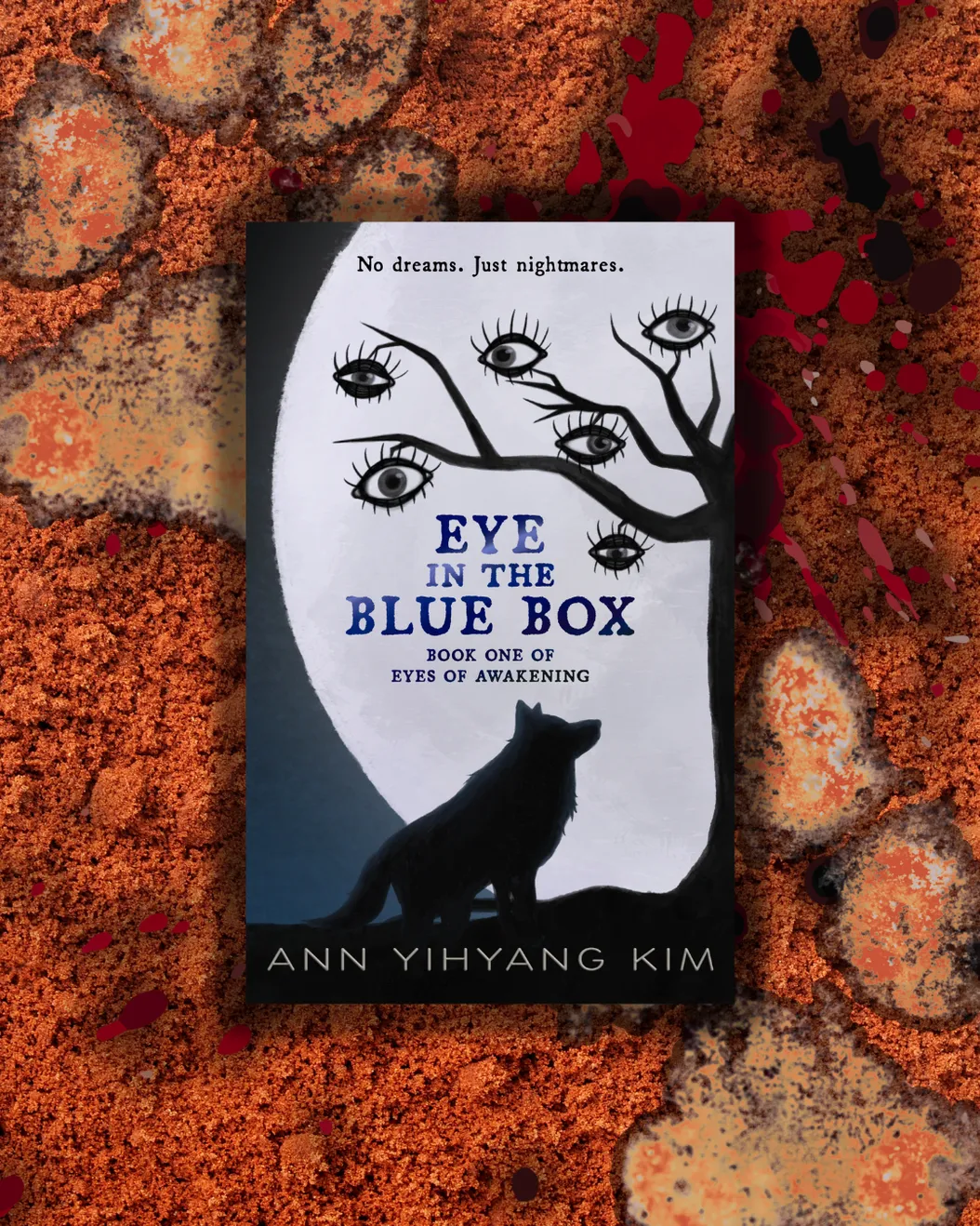
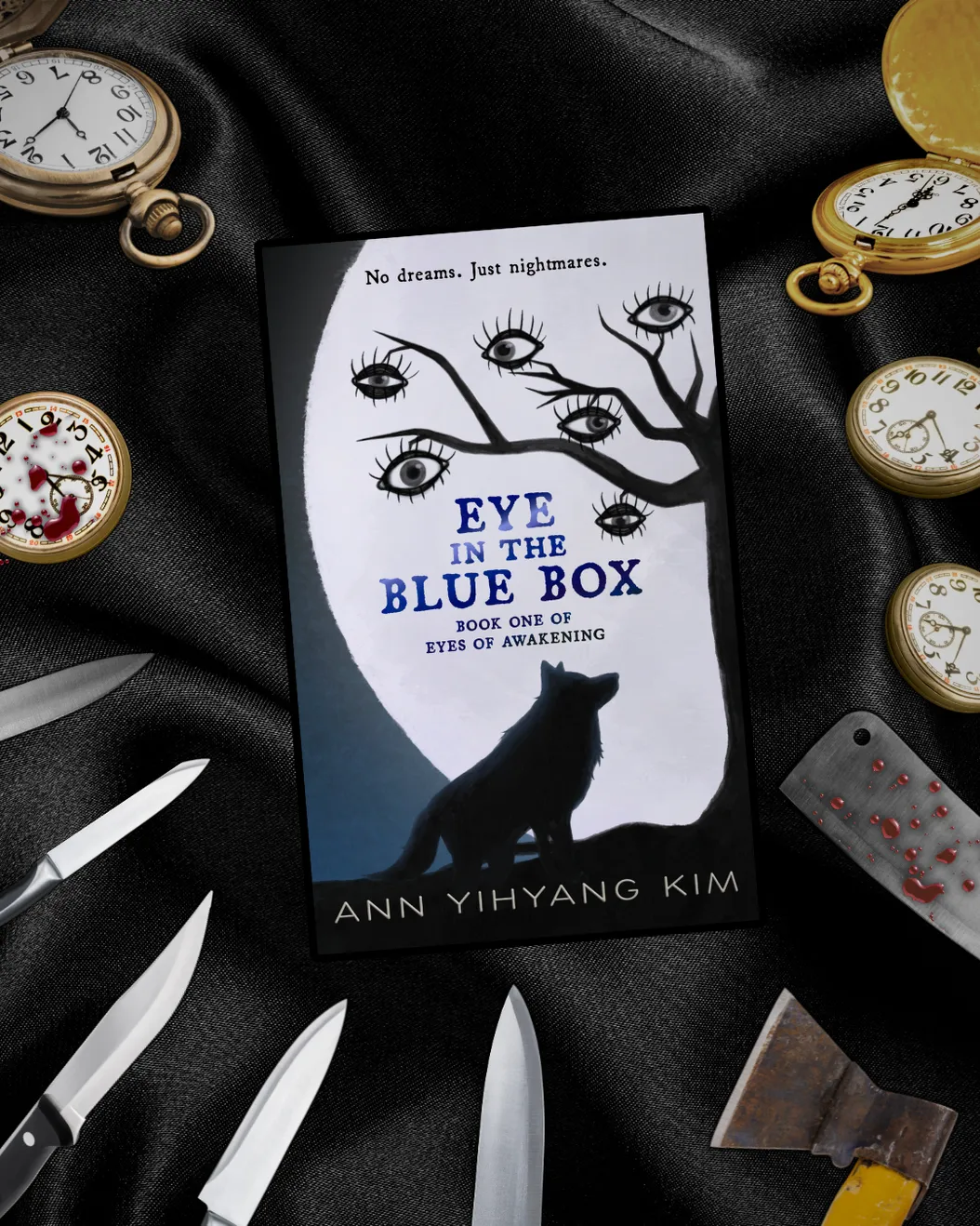
Take my books, too, for example. Because typical fantasy elements, such as intricate worldbuilding, different dimensions, a long and ancient history that creates the fabric of these dimensions, coming-of-age arcs across a wide cast of characters, and friendly animal companions create the majority of my books’ core, I prefer to describe my books primarily as “fantasy” books.
However, more than one reader has mentioned that they like the “horror parts” of my work too. Indeed, my books include everything from man-eating monsters to eerie landscapes to haunting visions to extreme violence. In this way, my books are not simply “fantasy” but also “dark fantasy,” which really is just a fancy way of saying “fantasy with horror but not so much horror that the horror parts totally override the fantasy parts.”
Even if my work isn’t overwhelmingly horror in the same way that something like The Sixth Sense is, it definitely contains horror, so much so that readers find horror to be one of its defining characteristics. And if my work contains horror as a defining characteristic, then, well, I think it’s safe to say that it belongs to horror in addition to fantasy.
And so, after all these years of hating on it, I discovered that I actually do like horror and even ended up creating horror literature. And in so doing, I was confronted with the shocking notion that perhaps the people who created and/or consumed works of horror weren’t as horrible as I’d initially assumed.
You’ll probably laugh when I say that even the most intense and violent parts of my work never seemed all that extreme or scary to me while I was writing them. People getting heads and limbs chopped off? Meh. That’s just the type of world they live in. It’s called survival, people. Get with the program. One of my characters losing their self control, letting rage take over, and torturing an enemy next to a burning pit of fire? Well, how else would that character act in that situation? It’s only logical. It’s called staying in character, people. Again, get with the program. And all the giant monsters dripping in blood and chasing people around and ripping their guts out? That’s actually a toned down version of the things I’ve had to endure in my nightmares. You think that’s scary? You should join me in my dreams!
Such were the monologues in my head. So, when people started reading my books and voiced that the violence and suspense were simply too much for them, I was surprised. (And yes, I now understand how dumb it was of me to be surprised. I did, indeed, write some scary stuff!)
Too much gore. Too much violence. Too much savagery. Just … too much! That seems to be the overarching complaint of anyone who has an issue with my work. At first, I judged such readers and wrote them off as pansies, but now, I’ve come to understand that the way in which they perceive me is probably similar to how I perceived creators of the popular horror blockbusters I hated so much. “What kind of sicko spends all their time and energy creating stories about a possessed, homicidal doll?” is what I used to wonder about movies like Chucky. And now, my haters are probably wondering “What kind of sicko spends years of time and energy bringing such morbid nightmares to life in her books?”
What my haters don’t understand, though, is that the horror elements of my work all came naturally to me, so much so that I didn’t even think that they were all that scary or gruesome or a part of horror. I was just channeling all the real-life horrors and traumas I’d endured through a fictional medium for people to enjoy while simultaneously expressing myself and releasing myself from the effects of those traumas. I didn’t mean to upset anyone. It’s just that I can’t manifest trauma through fuzzy rabbits, yellow sunshine, and sparkly unicorns. Likewise, if life hasn’t been a walk in the park, you simply won’t be able to find anything relatable in a nice walk in the park. Instead, it’ll be the haunted house standing at the edge of the park that draws you in, the house that seems to stare at you, reminding you that life is never truly safe or well.
And so, you end up writing about things like giant monsters ripping people apart and humans chopping other humans into pieces next to a giant lake of burning fire.
And that made me realize that maybe other horror creators may not have meant that much harm either. Fans of horror, creators and consumers alike, may not all be monsters after all.
Don’t get me wrong. I’m not saying all horror lovers are angels in disguise. I’m sure there are many out there who are, indeed, indulging in morbid curiosities in questionable ways or simply trying to prick the morbid curiosity of others to make a quick buck. There definitely are a lot of demons lurking in the horror industry.
But I sure didn’t incorporate horror into my stories out of malicious motives, and I don’t like violence, gore, and monsters so much as I like the experiences they can create and the lessons they can teach. And as all the wonderful essays from the horror authors included in Why I Love Horror can testify, in particular Cynthia Pelayo’s essay, there are a lot of other creators and consumers out there who don’t either.
Cynthia Pelayo grew up in an extremely abusive home. It was physically abusive, emotionally abusive. Just plain abusive in all sense of the word, so much so that it’s not an exaggeration to say that she grew up in a house of horrors. She was also isolated, alone. She didn’t have any peers who could understand or comfort her. Even God and religion weren’t an option for her because her abusive mother had twisted them too. So instead, she turned to horror, the only visual manifestation of something that was as dark and horrifying as the nature of her circumstances.
I learned through her essay that love for horror, even the slasher and supernatural hits that I detest, may not always boil down simply to morbid curiosities. I think there are a lot of people like Cynthia who don’t want to indulge in horror just for horror’s sake but instead, are searching for someone or something that they can actually relate to. And only horror can provide something terrible enough, intense enough, something that can abstractly but still accurately portray the deep, deep darkness of all their sufferings. Only horror can come close to providing something that these people can point to and say, “At last! I’ve found something that manages to express my pain! It speaks for me in ways that I can’t and does so without the judgement people often heap upon me. I feel like I have a friend who understands me at last.”
Cynthia also writes of how she bonded deeply with her father over their mutual love of horror. Her memories remind me a lot of my own childhood, which consisted of me relaxing with my dad at the foot of the couch, repeatedly watching The Little Mermaid one night then Braveheart the next for weeks on end. We probably sang “Under the Sea” just as many times as we screamed “Freedom!” together. The result was that I now love action movies and feel a special fondness toward them that I don’t feel for any other genre of movies.
Maybe there are horror lovers out there who love the macabre and supernatural because they also had a dad they’d watch movies with, but instead of action movies, maybe their dad really liked horror, and horror was the medium through which they bonded. Maybe horror is their nostalgic comfort, and maybe the long exposure has desensitized them to horror’s many frightening tropes. Everything from possessed dolls to homicidal ghosts probably seem normal now, just as how William Wallace getting disemboweled, Maximus chopping off limbs in the Colosseum, and Uma Thurman plucking out the eyeballs of her enemies are all pretty normal for me.
I still can’t say that I’m a fan of hard horror or that I’ll ever be able to like movies like Saw, and I still think a lot of horror stories across all mediums are gratuitous and without good intent. But I can no longer say that I dislike horror, especially now that I know that it can come in so many intriguing, intelligent, and even beautiful forms. Plus, I can hardly say I dislike horror now that I write it myself.
Nor can I pass judgment on others who create or enjoy any level of horror either, even works like seemingly mindless slasher films. You never know what led a person to create the things they did or enjoy the things they like. You don’t know their pasts, their relationships. Sure, they could be evil, twisted people. But they could also just be really lonely. They could have been chewed up and spit out by life and are now gravitating toward things that are swollen and festering like the wounds inflicted upon their broken hearts.
Are all these frightening and violent stories the healthiest way or an ideal way to cope during bad times or to process trauma? Probably not. But if there’s one thing I know about surviving dark times it’s that healthy and ideal choices go straight out the window in the face of survival. When a person has nothing and is told that there’s no way through but through, you can’t judge them for the things they turn to in order to get through.
Maybe for horror lovers, horror is the only thing that they have. Maybe it’s the strange but magical potion that somehow helps keep them afloat, the fictional insanity that stops them from sinking totally into their real insanity. Maybe it’s their comfort. Maybe it’s something they like for reasons that go deeper than flippant, morbid curiosities or the desire to make a quick buck. Maybe horror is a many-faced thing because ultimately, it’s just a very human expression of how unsettling, how unknowable, how tragic, how uncontrollable, how utterly horrible life, at times, can really be.
Maybe horror isn’t so bad after all.
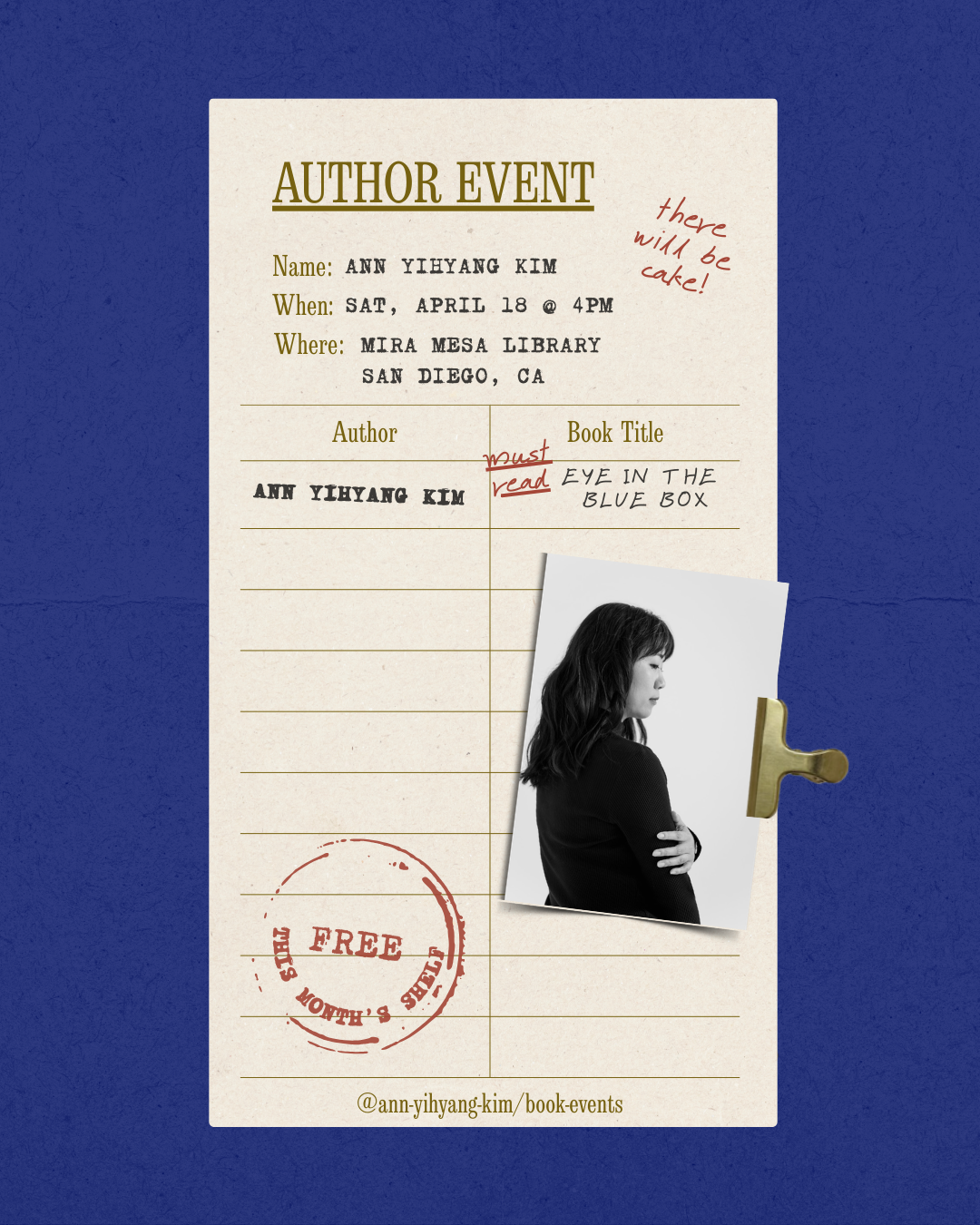
You are invited to my very first author event! Join me as I talk about my debut novel, Eye in the Blue Box! I’ll read a bit of my book, talk about its creation, and do a giveaway as well as a Q&A with the audience, you! I’ll also sign books. It’s a free event, and I hope to see you there.
Where: San Diego, CA - Mira Mesa Library - Community Room
When: Saturday, April 18th @ 4PM. It’ll last around an hour.
Admission: Free! Mark your calendars, and bring a friend :)