Back in September of 2022, I bought a thank-you dinner for my beta readers. I remember opening up a lot to them that night. Maybe it was because they’d generously read and edited my books so many times that I felt comfortable being vulnerable with them. After all, if you’ve read my books, you have, in many ways, peered into the the softest parts of my soul.
I confessed to them that I was anxious, confused, and frightened about the road I was currently traveling down with my beloved books and the long journey still up ahead. I asked them to pray for me, but not so much for the number of sales I wanted to make or for the skills I’d need to navigate all the many decisions involved in publishing books, though, of course, both mattered quite a bit to me.
No, what I wanted the most prayer for was my obsession with success.
Success. The word, for me, has long encapsulated two things: money and fame. Because behind the money and fame was what I really wanted: power. For behind the power was control. And behind control was the ability both to take back the dignity life had stolen from me and to protect it within a golden safe for all perpetuity.
I felt that if I’d had a lot of money during my adolescence and young adulthood, I wouldn’t have had to watch my mom scramble for years to raise me after my father abandoned us. We could have afforded to eat out whenever she was too tired to cook. We could have celebrated my high school graduation at a fancy restaurant or even just any normal sit-down where a tip was required instead of heading to KFC. She wouldn’t have had to beg relatives for money so that I could afford my first laptop for college. Maybe I wouldn’t have had to see her get down on her knees in front of my dad to beg him to stay with us. Sure, he’d gotten into an affair, but was he really going to abandon his own family?
If I’d had a lot of money, I wouldn’t have had to worry about my next meal or split one meal into three during college. I could buy as much food as I wanted, even when I fell ill. I could have even ordered food to my door. I wouldn’t have had to suffer behind a locked door, too sick to get myself to a restaurant or a grocery store.
I wouldn’t have had to avoid homeless men sleeping on the doorstep of the slumhouse I was living in. I could have lived in a complex where the girls’ restroom was on the same floor as my room and the washer and dryer weren’t located in a basement down a stairway fit for an Edgar Allan Poe short story. The bathroom wouldn’t get clogged, flood over, and drip its contents into the dining space on the floor below. The washer and dryer would actually work. The creepy landlord wouldn’t threaten me for money I didn’t owe him, and I wouldn’t have to blackmail him back in the middle of a public street to defend myself and keep what was rightfully mine.
I wouldn’t have had to live next to a crackhouse or live with mold and rats. I wouldn’t wake up at night as the rats squeaked in their nests and scratched away at the drywall, or shudder in my bed as I tried to ignore the visions of their claws finally breaking through and a mass of long-tailed bodies falling through an ever-opening hole. The loud crack of a cockroach falling from the ceiling and onto its back on my kitchen floor. Seeing its legs flail and wriggle. Using chopsticks to dig out the termites that had crawled into the warm crevices of my laptop while I was at work.
Fame, too, would mean freedom from suffering. If I had fame, people would be happy to see me. At the very least, their default mode would be one of respect when interacting with me. Within fame was the hope that the adults around me would stop telling me that I needed to smile more. My parents were going through a divorce, and my life as I knew it had turned out to be a lie. Maybe everyone would stop looking me up and down and recoiling every time I couldn’t muster the will to smile for them. Maybe they’d even ask me what was wrong and eagerly listen as I tried to articulate myself because if I were famous, my moodiness and depression would be accepted as “edgy” and full of “dark glamour” rather than marked as traits to be corrected or rejected.
Ghetto restaurant owners wouldn’t cuss me out because I complained about being served raw chicken wings. Everyone from hobos to admin assistants to stewardesses wouldn’t dare ask me if I could speak English. (Maybe I just don’t want to give people my hard-earned money when I’m strapped. I don’t want to smile and chat about the weather for the next fifteen minutes when I’m treading water emotionally. And I’m sure I’m not the only one who can’t hear properly inside of a plane and need to have something repeated.)
If I had fame, I’d be treated as a human being and even more, a human being of value, a person worthy of being cherished. Superiors at work wouldn’t throw me under the bus for the mistakes they had made. They wouldn’t suggest that they could simply change my name to something else when someone with the same name but a higher standing started work in the same office. They wouldn’t order me to lie to clients to make their lives easier then laugh at me when finding out I’d refused. When I’d make honest mistakes due to lack of training and direction, they wouldn’t side-eye me, sneer, and say, “Really? I mean, come on. You graduated from Berkeley.”
They wouldn’t sexually harass me, and I wouldn’t have to be the one who quit my job when they did.
If I’d been rolling in money, if I had reeked of fame, maybe none of that would have ever happened. If I amassed a fortune in the future, was recognized in the future, then maybe I’d finally have some kind of insurance that would protect me from then on from the downward spiral society was so bent on sending anyone who’d been unfortunate enough to come across prolonged misfortune. Once I had money and fame, this world and all its people within it would stop descending on me, picking away at who I was no matter what I did, thinking that just because I could heal once that I could heal again and again and again.
I would have wholeness. I would have safety. I could keep my dignity. I could grasp freedom.
If you’ve read Tree of Eyes (Book 2) to the end, you’ll have seen in my author’s note that I graduated high school with a weighted GPA of 5.0. I went on to graduate from UC Berkeley, which is consistently ranked as one of the top schools in the world and boasts an English department often ranked number one in the nation. There, I wrote a master’s level thesis even though I was an undergraduate because one of my professors saw potential within me and pulled me aside to ask if I wanted to conduct independent research with her. This was on top of an internship that many students could only dream of getting into. I graduated with over a 3.9 with every type of honors and several glowing recommendations from top professors.
I think it’s fair to say that I achieved almost every level of success I could hope for at that age. But even while accomplishing this maximum amount of success, I couldn’t suppress the disconcerting murmur echoing out from somewhere deep in my heart, an anxiety that I thought success would quell, not stoke.
“Is this it?”
The question of “Is this it?” was the form my anxiety took on again and again. Sure, school wasn’t the same as real, adult life, so I didn’t want to assume that the impression of success I’d received in school would equate exactly to the type of success I could achieve out in the real world. Good grades and honors surely weren’t the same as raking in the dough and receiving universal recognition out in the workplace.
But I couldn’t shake the unsettling thought that all the success I’d won in school, as proud as I was of everything, had ultimately left me with a bad aftertaste. Everything seemed to boil down to the conclusion that life was just a rat race in which I was always clawing after some kind of achievement, and getting my hands on a prized accolade or valued skillset only to led to yet another hunt for another form of recognition, another superior talent, another glowing goal that I had no choice but to pursue.
Don’t get me wrong. My good grades, the pedigree of my university, the adulation of professors and colleagues alike, all of it did open doors that would have remained closed otherwise. Success and hard work were, indeed, critical for my survival. But strangely enough, success never made me feel any safer.
Maybe it was because success never made me feel satisfied.
I didn’t know what to do with the anxiety and dissatisfaction that continued bubbling and boiling deep within me, though. So, knowing no other way of life, I simply continued running the rat race. The fact that my family couldn’t afford to help me out in any way both during and after school fueled my desperation to survive and succeed. The poor living quarters, the hunger, the uncertainty of coming months all continued pressing upon me the importance of growing rich and famous.
I climbed my way up the ladder in the workplace and fought my way out of the awful entry-level jobs that had treated me so disrespectfully. I began working with great and powerful men who treated me with respect, acknowledged my intelligence, and put my intelligence to good and meaningful use. Working with them gave me the unique opportunity of seeing how people of power were treated. These were people who held enough awards and influence in their fields to be internationally acknowledged as experts and consulted for their wisdom on a daily basis. Yet, I came to see how much disrespect was thrown their way, too.
Rude, outrageous, and downright immature behavior were often flung at them, often due to dumb and petty reasons like jealousy. Some of the comments they received even rivaled the derision I’d had to endure in my entry-level positions. And, of course, there was nothing like jealousy that could smear unjust slander all over their good names.
Money and fame couldn’t protect my innocent superiors from the vices of their fellow man. In fact, the saying of “more money, more problems” only seemed to ring truer the longer I worked with the rich and the powerful. I, myself, was given enough of a say in my roles that I came to wield a good amount of influence too, directing and advising people of importance. But that didn’t stop Karens from being Karens or Kevins from being Kevins to me, my superiors, or both of us simultaneously.
All the while, that small, disconcerting voice at the bottom of my heart would whisper, “If it’s like this for you now and if it’s like that for them, who are in some ways, the future you, do you really think that things will get that much better just because you get rich and famous? Do you really think money and respect can save you? Success makes survival possible, sure, and easier, yes. You know that already.
But did you know that success won’t solve everything?
Did you know success can’t heal you?”
My conversion to Christianity during the end of my college years made this voice stronger. Through the Bible, I learned that success was a cold idol unworthy of loyalty. Money can’t save your soul, but it can corrupt it. Everyone from King Saul to King David devolved into varying levels of insanity and sin because of the power which fame and recognition afforded. King Solomon had every type of success I could ever wish for but had concluded that it was all simply “vanity” in the end. I knew that I should lean on God instead of success, that I should find my identity in Him rather than myself and my countless and meaningless achievements. I needed to accept that He loved me, and I needed to accept that that was enough.
But I just couldn’t understand how. God was immaterial, and it wasn’t as if bad things would magically disappear just because I leaned on Him. I couldn’t survive this dog-eat-dog world simply on romanticized notions of faith and love alone. Perhaps the world worked one way and God the other, and that was that.
Even with survival aside, though, I needed meaning. If I didn’t have the glow of success to reach for, then I didn’t have a goal to run toward. If I didn’t have a goal to run toward, I was truly left with nothing. If I had nothing, I was nothing. That’s what the world had always told me, wasn’t it, that I was nothing? And everyone had treated me accordingly.
What if they were right?
No, they couldn’t be. I had to be something. I had to prove them all wrong. I’d suffered too much and survived too much to amount to absolutely nothing. Do you mean to tell me that I went through all those horrible, unjust, and cruel things just to end up like everyone else? If I’d suffered an inordinate amount then it only made sense that an inordinate amount of success would follow too. What was the point of going through everything that I did if it all amounted to nothing?
Was I really that much of a loser?
It goes without saying that these types of dark thoughts fell over my writing journey too. I wanted my books to do phenomenally well. Otherwise, what had been the point of working on them so hard and for so many years? What identity did I have to fall back on if I failed to become a successful writer? This whole publishing thing had to work out. It just had to. I had to prove myself to everyone, to me. My books had to be the answer. They just had to be!
These turbulent, torturous thoughts continuously clashed and warred with the better part of me, the part that trusted God and had already experienced enough of life to know better. This part of me sounded awfully a lot like my husband, who was always worried about how I was placing boulder-like burdens upon my own shoulders. That part of me pled with me to stop, to rest, to stop fighting even as I clung to my belief in success. Especially when it came to my books, this part of my heart would say, “But you love writing! You love writing so much. Don’t ruin this thing for yourself, too, this great gift God has given you. Just let go of your obsession with success. Don’t mould writing, of all things, into yet another idol to which you’ll need to serve one accomplishment after another.”
But I couldn’t stop myself, no matter how hard I tried. I kept on wanting more, needing more.
So, I asked my beta readers to pray for me.
Nearly four years have passed since that dinner and that prayer request.
After years of struggling with my addiction to success, after all the internal turmoil, I’m happy to tell you, my dear reader, that my prayer was answered.
I’ve kicked my dependence on success.
I honestly never thought I’d come to place where I could say, “I don’t need my book to become a huge success. In fact, I, as a person, don’t need to be a huge success. I’m happy being totally and completely normal.” But I genuinely mean it when I say that I don’t need to become the next JK Rowling to be a good writer. I don’t need to be on the New York Times Bestsellers list to know that my books are great. I don’t need money or fame, period, whether it comes to my journey in writing or my overall journey in life. I’m quite happy as I am.
There were countless events that helped pry off the white grip I had on success, so I won’t attempt to describe each and every one. But each and every one did tie back to one unifying factor that became the foundation of my healing.
Love.
As corny as it sounds, it was love that healed me.
Love allowed me to experience what really matters, what actually satisfies, and what can, therefore, fill my life with significance, a feat that success was never quite able to achieve. The love I’ve encountered through my writing journey in particular has played a huge role in brightening the part of my soul which my obsession with success had darkened for so long.
Now, I first want to make it clear that from the publishing world’s eyes, I really am a nobody. I’m self-published, which means that I don’t have an agent, and no publishing house, great or small, knows who I am and they wouldn’t care even if they did. The majority of my “followers” on social media are my friends and family. I only have two reviews on Amazon for my first book, and one of those reviews goes out of its way to talk about the things it didn’t like about my book. I sell about one ebook a day, which is absolutely pathetic when measured by the standards of traditional publishing houses and would cause any one of them to start pulling my book off of shelves.
Yet, my friends jump for joy (sometimes literally) when I tell them that I sell about a book a day. To my friends, a book a day has always been a win to celebrate. It was my friends who bought the first copies of my books and gave them the push they needed to sail out into vast world of publishing. It was my friends who filled the seats of my first author event.
My book, which was written by a self-published nobody and has garnered minimal reviews and accolades, nearly brought my grandmother to tears and healed a deep wound I never thought could close (as I detailed in this post). Whenever I tell my mom that I’m just a self-published nobody, she insists that I am a real author with a real book, and I can tell she means it. I can tell that my work has brought my mother, who sacrificed and suffered so much while raising me as a single mom, a great sense of accomplishment that a great mother like her deserves to feel.
Through the books that all the somebodys of this world would call undeserving of investment, I’ve played a positive role in the lives of my friends’ children, especially their daughters. Some of these young women have raved to me about my books, saying that my saga is one of their favorites now or how it made them cry or how they couldn’t put it down and devoured it all in a matter of days. I usually stare at them, wide-eyed and dumbfounded, whenever this happens.
I feel bad for my lack of a reaction. I must look so unenthused while they’re spilling their hearts out to me. But it’s because I’m so honored and humbled that I feel floored. The biggest reason I set out to write my books was because I had wanted to add something to this world. I wanted to help others, and here I am now, doing just that and for the younger generation, which must be protected at all costs! Through my books, I have been given the great honor of teaching these important young women the life lessons that I wish I’d known at their age. They’re the lessons I would have ingrained in my own children had they been born. The fact that I can impart such knowledge to the children of loving friends feels akin to redemption.
Even before my books were published, even when they were only a private manuscript that had the potential never to see the light of day never mind any success, my loved ones continually leapt forward at the sight of any opportunity to help me achieve my dreams.
One of my closest friends agreed to create my book covers even though she was pregnant with her first child. Her pregnancy was a difficult one, and though I told her multiple times that she could quit on my books, she refused out of a fiery will to do good on her word and because of her love for me. Such was her dedication that she toiled away to finish the covers of both my books before promptly giving birth the very next day.
And my husband. My husband, Albert, has consistently cooked and cleaned for the both of us almost from the moment we got married just so that I could have time to write. He has a much more demanding nine-to-five than me and is our breadwinner. Yet, he has never once complained while preparing our meals, doing yardwork, and folding our piles of laundry. If I was too tired to write, he never held anything against me or asked me to do more but instead, told me to rest and watch TV as he scrubbed dishes well into the night.
These things, these so-called small actions of love that prestigious organizations and accomplished celebrities alike would call unworthy of money and fame, these are the things that filled my heart with the joy which I’d believed success would bestow. These so-called ordinary nobodies are the celebrities of my life. It’s their actions that have given me a golden standard by which to measure happiness. I’m okay with kicking my addiction to success because I’m still left with something far greater. I’m left with the relationships that matter and the small things that are beautiful with or without money and fame, the things that enrich my everyday life.
I’m left with memories like my very first performance as a member of the traditional Korean drumming group at UC Berkeley. My friends and I drank rice wine backstage, jittering with nerves and excitement before the show. At the end of our performance, an old man in the audience rose to his feet and danced with us, arms raised in the traditional Korean way, bouncing to the rhythm we were creating, using that slow yet exuberant way that’s unique to Korean dancing. It’s customary for audience members to participate whenever traditional drums are involved because such music was used for farming and festivals back in the day. But the gap between performers and audience members grows ever wider with modernization and westernization. You can only imagine the thrill I felt when this old man crossed that gap and danced with us. We were all moving together, performers and audience member alike, feeling the reverberation of our drums in one unified, thrumming heartbeat. The older members of my group, who usually tried to carry themselves with cool and poise, laughed with childlike abandon as we broke formation and the rest of the crowd began trickling in. One of my professors raised her scarf and began dancing with us. It was a whirlwind of drums, laughter, and adrenaline.
There was a great deal of fun to be had outside of performances as well. There were many nights when friends and I would find ourselves walking back to our housing units, drunk on alcohol, music, and excitement. Not wanting it all to end, we’d sit outside of our units, chatting away and even air drumming and singing folksongs into the night and toward morning. We must have looked like total fools. But maybe that was also part of the fun.
We’d argue a lot too, sometimes in explosions, other times in seething, passive aggressive streams of bitterness. But the catharsis of clearing the air together meant that we always figured it out and reconciled before long.
Without those experiences, I wouldn’t have been able to create the Hunters in my books which have brought so much joy to myself and others.
Rewinding my mental clock, I come across memories of my mother and all the sweet moments we shared despite the chaos that was always howling just outside the small nest of safety she’d built for us. She’d drive me to piano lessons every Friday because she understood that I needed extracurriculars on my college applications. She also knew I really wanted to keep playing piano despite the family finances that were disappearing by the day. During summers, when it was sweltering here in southern California, we’d enjoy the moments whenever a traffic light would stop us on the way to my lessons. Those brief moments gave us the opportunity to lift our elbows and let the car’s AC cool our armpits. We’d giggle together and make fun of ourselves.
That’s where my protagonist, James, got his armpit-cooling habit from, a habit that has made many readers chuckle.
Let’s fast-forward to my mid-twenties. I felt so comfortable with my superiors, those great men whom scholars from around the world came to consult, that I’d openly scold them in the office or stamp my feet as I insisted that they were making the wrong decision. They would sometimes look cowed and ashamed as I, a twenty-something-year-old girl-woman waved documents at their noses and ranted at them. Other times, their own tempers would fire up and they’d vehemently defend their innocence before me. Arguing in such a manner somehow deepened our trust in one another. We both understood that we were only arguing because we cared about a bigger picture, and whatever was said, we trusted the other to get over it eventually. We both knew there were bigger fish to fry and that we’d fry them together.
I think you know what these memories allude to if you’ve read Tree of Eyes.
I wonder what other memories will find their way into future books?
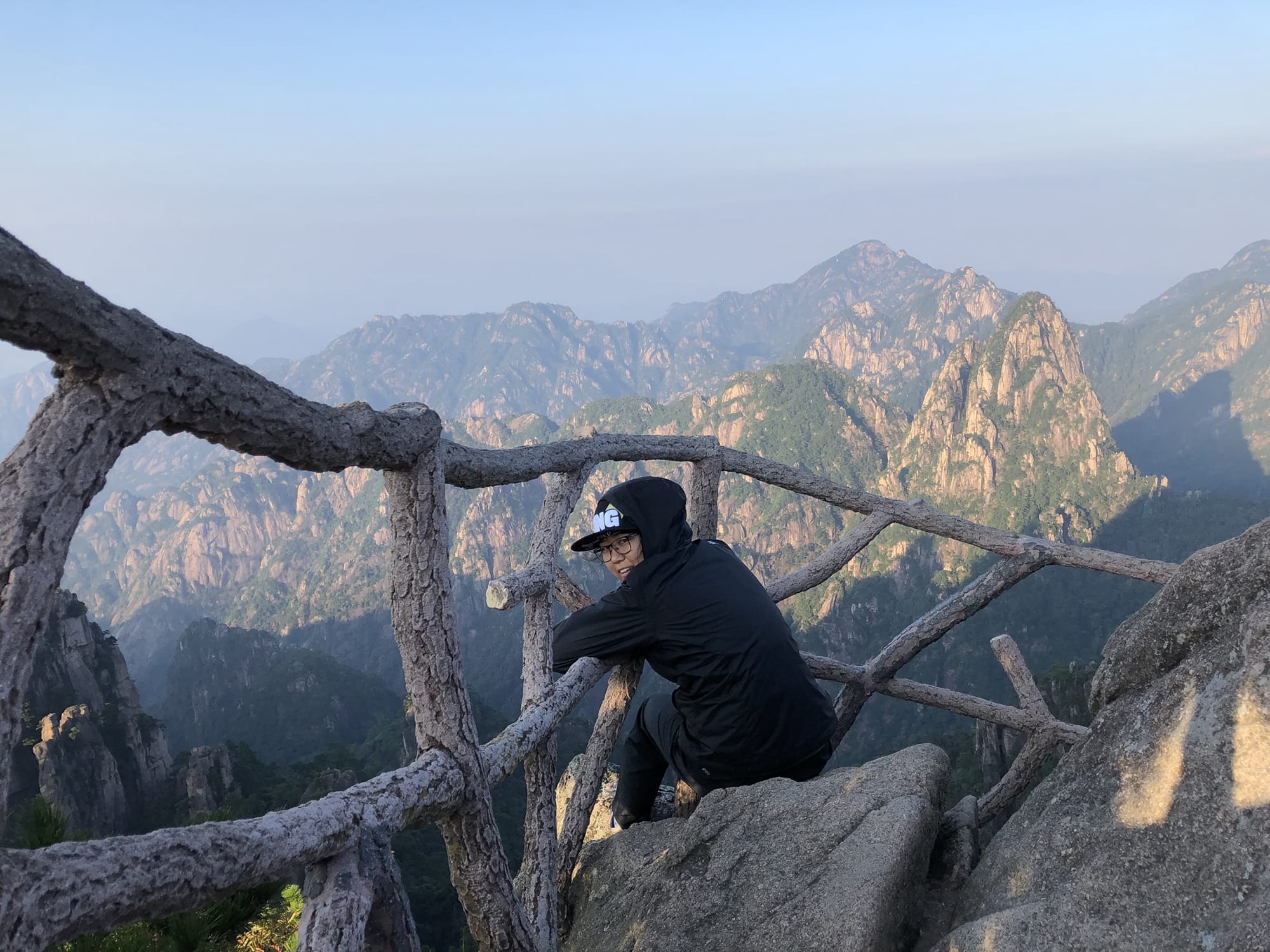
Maybe it’ll be the soft admiration in my father-in-law’s eyes as I walked out of the dressing room, wearing make up and a colorful kimono during our family trip to Japan. My dog, Max, still a sprightly young dog, rushing out the door, leaping up, and smiling as he snapped his jaws at a bird, which flapped and fluttered for its life as it escaped into the sky. Getting stuck on top of a small boulder when my family and I visited the majestic Huangshan mountains in China. The young woman who looked up at me with a stern expression then extended both hands, jabbering away in Mandarin. Me reaching out my shaking hands and gripping hers even though I had no idea what she was saying and making my way down the boulder, much to her satisfaction. Albert getting down on one knee and proposing to me using my full name, including my Korean name, which is difficult to pronounce. Holding his hand across the dinner table as we wait for our anniversary meal at the restaurant we always celebrate at. Watching a cat flee from Albert in our garden. Him looking up from the weeds in equal surprise. Flipping through books at a bookstore and finding one that hits the spot. Devouring that book in the coming days. Suddenly feeling a boost of energy during the grueling conditioning segment at my gym and catching the elusive rhythm of endurance at last. The last meal I had with my paternal grandmother before she passed away. She cooked my favorite food, Korean oxtail soup, and gave me the best portions. She snapped at my grandfather when he tried to sneak his chopsticks into my dish to steal some of the yummier parts. I suppressed nervous giggles as she shot daggers at him with her eyes. He mumbled his objections and defenses while withdrawing his chopsticks.
Maybe I’ll use these memories for my books in the future, but even if all of them prove useless to my writing endeavors, I don’t care. I really don’t care because they are precious whether or not they are useful. These experiences are living proof that I am loved and cherished. I don’t need the money and the fame because I already lead a rich life. I am known by the people who matter. Success is not the same as satisfaction. It is not the same as love.
As for the opinions of others, especially of those who hurt me so deeply in the past, the ones I’d felt I needed to prove wrong?
Eh.
I can just shrug them off. You meet both good and bad eggs in life, and even money and fame can’t protect you from the bad ones half the time. It just is what it is.
My identity lies in the love I’ve received from friends and family and above all, the God who gave me those friends and family. I never planned on meeting the people who have been so generous to me with their love and kindness. I never sought out the experiences that supported not only my writing but the rest of my mind and all my soul. If anything, I ironically chased after the recognition of people and organizations that didn’t care about me as a human being. I was willing to forgo the small things in life for grandiose experiences and showy accolades. For a long time, all that glittered to me was gold.
There was no way I could have let go of my false notions of success on my own, being as addicted to success as I was. I needed a god who could put me in contact with the right people at the right time and in so doing, steer me to come to the conclusions that I did. I needed the love of God above all else and was blessed enough to receive it.
Why do I need fame when I am known by God Himself?
What does money matter when I have God’s love?
It’s important to survive in this life and to strive toward goals and excellence. I will never deny that after all I’ve been though. But it all becomes sinking sand that swallows you whole if you let success become your life’s meaning. It’s only when you surrender what you know deep down is wrong, when you stop caring about the opinions of those who should matter the least and pay attention to the people who matter the most, the people who love you, that you’ll find what it took me decades to accept and to enjoy.
You’ll find peace at last.